





The Psychology of Repeating Business Mistakes
Business owners are often told that failure is valuable because it creates experience. But experience does not automatically produce better judgment. Sometimes a failed decision strengthens the explanation we already wanted to believe, making the next decision look more informed while remaining built on the same underlying assumption.
A recent 2026 study of successive entrepreneurial failures illustrates this problem. The researchers found that overconfidence, optimism, motivational reasoning, and confirmation bias could interact in ways that allowed judgment errors to persist across different ventures.
The entrepreneur did reflect on previous failures, but early explanations often led to incremental adjustments rather than questioning the assumptions behind the decisions. Deeper learning emerged only when those assumptions themselves were reconsidered.
For a business owner, this creates an uncomfortable possibility: you may have learned from your failure without learning the lesson that matters most. Imagine a product launch that fails. You might conclude that the timing was wrong, the marketing budget was insufficient, or the sales team did not execute well enough. Each explanation may contain some truth.
The more difficult question is whether the original belief about the customer, product, market, or business model was itself mistaken. A useful post-failure review therefore needs to go beyond What went wrong? Ask instead: Which assumption did I hold before the decision, and what evidence now contradicts it? Then ask what evidence you may be unconsciously ignoring because it conflicts with your preferred explanation. It is also worth separating what you know from what you are telling yourself. “The market was difficult” may be accurate, but it can also become a convenient explanation that protects a business owner from examining decisions that were within their control. The purpose of a postmortem is not to assign blame to yourself or others.
It is to make the next decision using a more accurate mental model than the one that produced the previous outcome. Sometimes that requires preserving part of the original strategy. Sometimes it requires admitting that the lesson from the previous failure was itself incomplete.
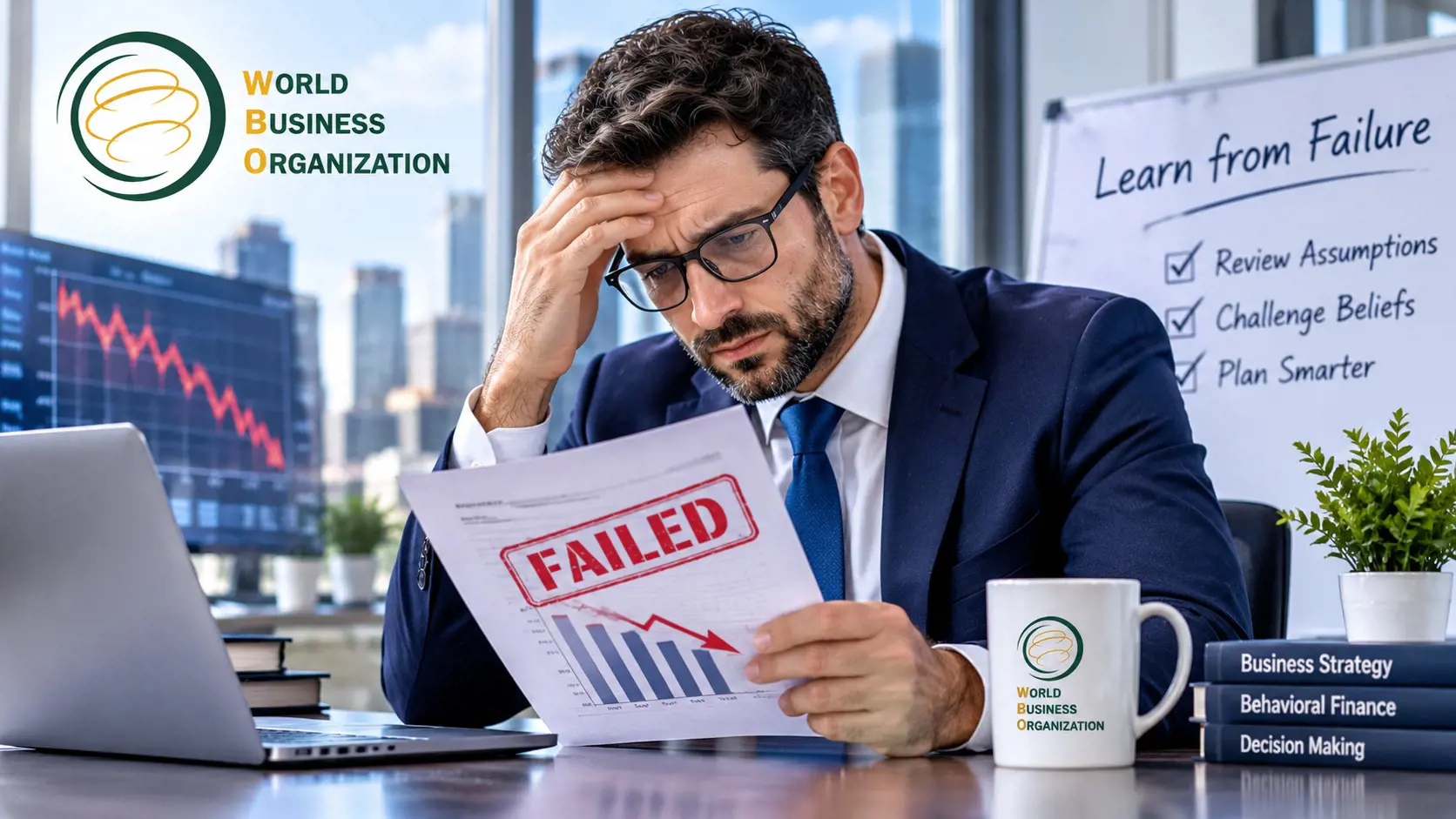
Why do entrepreneurs sometimes repeat the same business mistakes despite previous failures? This article explores how overconfidence, confirmation bias, and flawed assumptions can prevent meaningful learning—and why challenging the beliefs behind past decisions is essential for building better business strategies.
Font Size
1x
Reading time: 2 min