





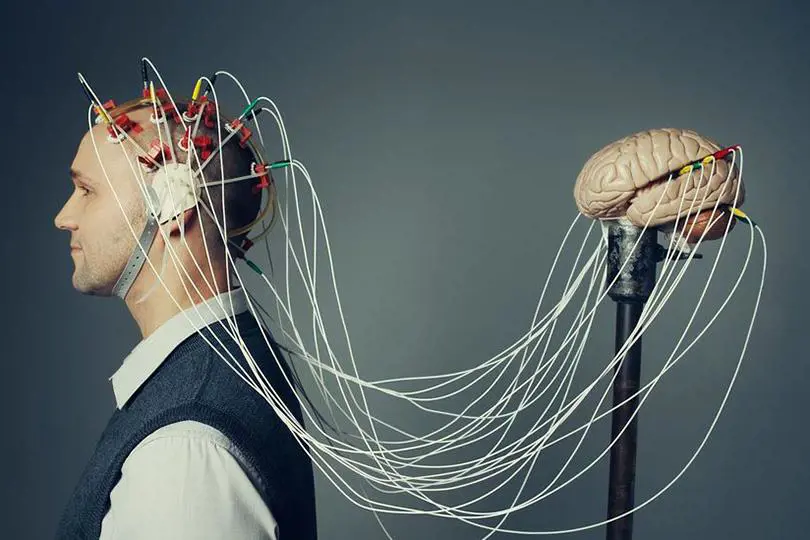
Can Your Body Reveal Financial Risk?
Beyond What Traders Say
Financial decisions are often explained through market analysis, economic expectations, and rational calculations. However, an important part of the decision-making process takes place beneath conscious awareness. While traders evaluate prices, news, and investment opportunities, their brains and bodies continuously respond to uncertainty, potential rewards, and financial threats.
This is where neurofinance and biometric research introduce a new dimension to understanding financial behavior.
Neurofinance combines neuroscience, psychology, and financial theory to investigate how the human brain processes risk, evaluates rewards, and responds to uncertainty. Researchers increasingly use non-invasive technologies to examine these processes, including electroencephalography (EEG), eye-tracking, heart-rate monitoring, and skin conductance measurement.
What Can the Body Tell Us?
Different biometric measurements provide researchers with different perspectives on human behavior.
- Heart Rate and Heart Rate Variability: Changes in cardiovascular activity can provide information about physiological arousal and stress responses during demanding financial decisions.
- Eye-Tracking Technology: By measuring where and for how long individuals look at financial information, researchers can investigate attention, information processing, and the way investors evaluate competing opportunities.
- Skin Conductance: Changes in the electrical properties of the skin can indicate variations in physiological arousal, helping researchers examine reactions to unexpected market movements and financial uncertainty.
- Brain Activity (EEG): Electroencephalography allows researchers to study patterns of electrical brain activity associated with attention, cognitive effort, and responses to financial information.
Importantly, none of these measurements independently reveals exactly what a person is thinking or whether a trader is experiencing fear, greed, or confidence. Their scientific value comes from combining physiological data with observed decisions, experimental conditions, and behavioral analysis.
The Emerging Science of Financial Behavior
Research involving professional traders has demonstrated that physiological responses can change significantly during periods of market volatility. A 2024 study of trading professionals also examined how cardiovascular and electrodermal responses vary during financial market events, suggesting that individual physiological patterns may contribute to understanding differences in risk processing.
These findings open opportunities for more advanced research into how experience, stress regulation, and individual behavioral characteristics influence financial decisions.
The Neurofinance & Biometrics Lab Perspective
The future of financial research will increasingly depend on combining traditional market analysis with a deeper understanding of human behavior.
A modern Neurofinance & Biometrics Lab can contribute by developing controlled experiments, studying decision-making under simulated market pressure, analyzing biometric patterns, and examining how psychological training influences financial behavior.
The objective is not to predict markets through biological signals or replace financial analysis with technology. It is to understand the human decision-maker more accurately.
Financial markets are driven not only by numbers, but also by the human minds and bodies interpreting them.