





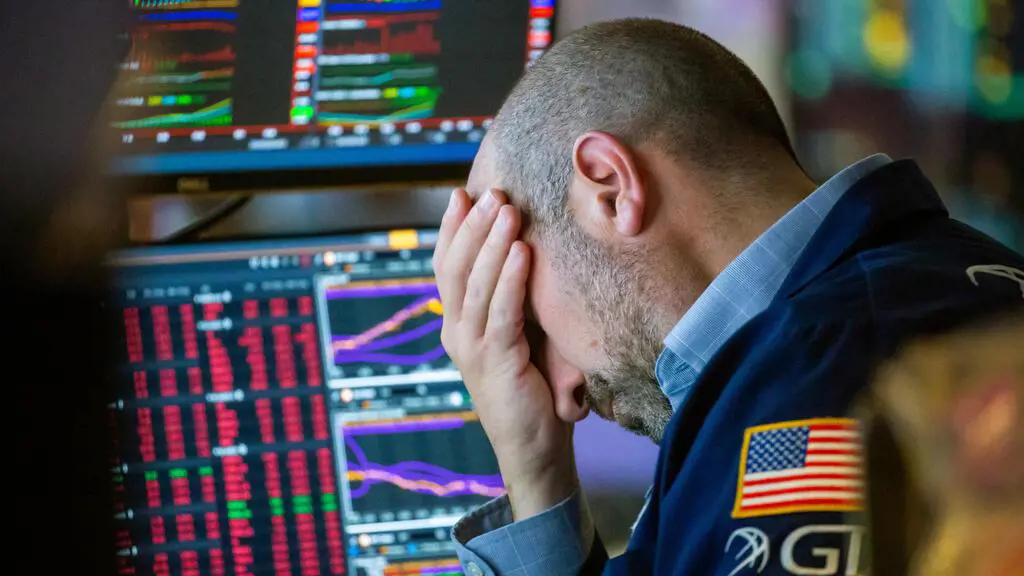
The Psychology of Losses: Why Traders Hold on to Losing Positions
The Psychological Trap of Losing Trades
One of the most common challenges in financial trading is not identifying market opportunities, but making rational decisions when those opportunities move against expectations. Many traders find it psychologically easier to secure a small profit than to accept a loss, even when market conditions suggest that the losing position should be closed.
This behavior is not simply a lack of knowledge. It is connected to a well-documented psychological phenomenon known as the Disposition Effect.
The disposition effect describes the tendency of investors to sell profitable assets too early while holding losing investments for too long. In a landmark study published in The Journal of Finance, economist Terrance Odean examined the trading records of approximately 10,000 brokerage accounts. His findings demonstrated that investors were significantly more likely to realize gains than losses, even when the investments they continued to hold subsequently performed worse than those they had sold.
Why the Human Brain Resists Accepting Losses
A central explanation comes from Prospect Theory, developed by psychologists Daniel Kahneman and Amos Tversky. The theory suggests that people generally experience losses more intensely than equivalent gains.
For a trader, closing a losing position can therefore feel like admitting a mistake. Instead of evaluating new market information objectively, the individual may begin searching for reasons to justify staying in the trade.
Three psychological mechanisms often reinforce this behavior:
- Loss Aversion: The emotional discomfort of accepting a loss encourages traders to postpone difficult decisions.
- Confirmation Bias: Traders selectively focus on information that supports their existing market position.
- Sunk Cost Fallacy: Previous financial or emotional investment makes it harder to abandon a position, even when the original reasoning is no longer valid.
These mechanisms can create a cycle in which one poor decision leads to another, increasing financial exposure and psychological pressure.
Training the Mind to Make Better Decisions
Overcoming these biases requires more than market knowledge. Traders need structured decision-making systems that reduce the influence of emotional reactions.
Practical methods include defining stop-loss levels before entering a trade, reviewing decisions rather than judging performance solely by outcomes, maintaining a trading journal, and periodically examining repeated behavioral patterns.
A particularly important skill is learning to distinguish between a temporary market fluctuation and a fundamental change in the conditions that originally justified a trade.
The Psychotrade Academy Perspective
At Psychotrade, understanding behavioral biases should be an essential part of professional trading education. Traders must learn not only how markets operate, but also how their own minds respond to uncertainty, losses, and financial pressure.
The objective is not to eliminate emotions. It is to prevent emotions from replacing analysis.
In trading, accepting a small loss at the right time can be a sign of professional strength—not failure.